Bare Life
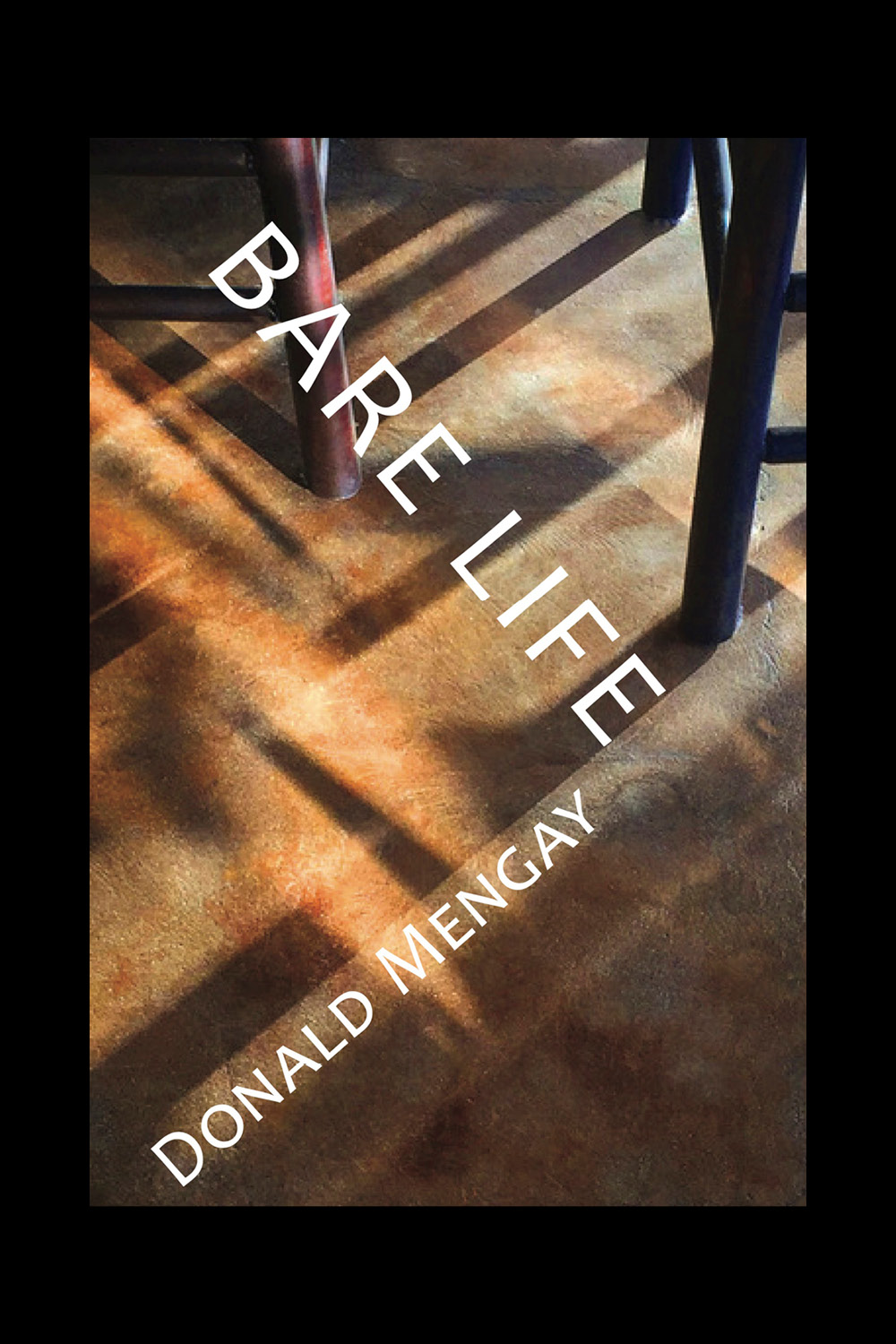

DESCRIPTION
Bare Life is the third volume in The Eldorado Trilogy, following The Lede to Our Undoing and Ojo. It checks in on the lives of the characters in the first two volumes, forty years after the action left off––though reading the first two volumes isn't a requirement for understanding events. If The Lede and Ojo are about finding love in a homophobic and HIV-endangered world, Bare Life asks what it means to have survived and even thrived despite those challenges. But it also poses the question, Survived and thrived how? At what cost? And to whom? It wonders, Have we really arrived, or is it just something we tell ourselves? And if what we considered success in early life turned out not to be as satisfying as we hoped or predicted, what did we miss? What would we change? The novel thinks about shifts in the category queer, how it has opened up to a whole host of new ways of being, new identities, and challenges both inside and outside of a queer community in dealing with age, class, gender, race, religion, and other ways of being human.
REVIEWS
"A fierce elegy in mosaic, this final entry in Mengay’s Eldorado Trilogy (after Ojo) contemplates love, loss, art, sex, and “those dismal and dispiriting realizations that your country was run by a government of bigots.” Bare Life continues the story of twins Jake and Wren, introduced in The Lede to Our Undoing, in New York City and the small Western town of Eldorado, where in the present a nephew faces life after they’re gone—and questions of what to do with the “letters, journals, sketchbooks, canvases” left behind now that the world—and the art market—has embraced Jake’s work posthumously. Mengay adopts a range of voices and perspectives to fill out these lives, offering spirited accounts of art-world scandals and disappointments “at the height of the panic about the ‘gay disease’”; raucous and incisive discussions of religion and power and life in what one character calls “Puritania”; a bracing set piece of chapters in the voice of a young Russian man falling for the older Jacob; and much more.
Surprise abounds as Mengay surveys lives and eras, blending a ruminative mode with bursts of stellar comedy—Jake’s future husband, Tommy, facing a polygraph test to land a big New York job is delightful—and outrage at bigots’ refusal to be consigned to history. Of course, apocalyptic denunciations of Jake’s unapologetically queer art and life, like a senator and a reactionary newspaper labeling “the work and me dangerous, a threat to society,” only “helped skyrocket the auction price.”
Mengay links such last-century scandals both to the present, through “the bigots’ bannerman, Crumm”, who has a tower on 5th Avenue, and also to the reign of Stalin, through moving excerpts from a family memoir. Time is fluid here, as past and present, legacy and self-invention, all burn with urgent power, and readers must work to keep up, but Bare Life yields continual pleasures, insights, and illuminations, in prose of rare precision." —BookLife
"An artist gets his posthumous due in Mengay’s literary novel, the third in a series. Jake, the alienated hero of the first two volumes in the author’s Eldorado trilogy, is dead…in the present, at least, where his paintings have found posthumous popularity in the art world. His mixed-race, trans nephew Will has taken up the story of Jake and his twin sister Wren (Will’s mom) from the vantage of the quiet Western town of Eldorado, where Jake lived out his final years. As a kid, Will was never much interested in Jake, whom he thought of as “untoasted Wonder Bread.” It’s only at college that Will realizes Jake is a major and incendiary queer artist, described by one tabloid as “The Diabolic Dabbler, Painter of Perversions, and Prince of Peccadillos.” Though Will is Jake’s lone surviving blood relative, he is not the heir to or executor of the dead man’s estate: that role goes to Serge, the friend whom Jake’s husband Tommy (also deceased) referred to as “the other husband.” Will does have access to Jake’s papers, though—an archive of documents that tell the story of Jake and Wren and others in their sprawling web of relatives, friends, and lovers, much of which is relevant to Will’s understanding of his own history. As Will’s investigation unfolds, the narration becomes untethered to his time and point of view, drifting through other characters’ experiences at various points across the decades and bringing Jake and Wren back to temporary life. Mengay’s prose is dense and philosophical: “It’s a mind game, to come upon an archive,” observes Will with typical lyricism. “Like looting a grave. An archive’s a crypt, and cryptic; bursting surprises, things you didn’t expect or want to come upon; things you don’t want to know.” Elegiac and sweeping, the novel examines the ways that history can traumatize you into making art, and how art can heal even after the artist has gone. A polyphonic swan song for a trilogy about identity and family." —Kirkus Reviews
"Bare Life is a raucous dinner-table conversation among intergenerational queer family who lovingly interrupt and contradict one another. Even the ghosts and the archives have their say. If "bare" life—pure sensual existence unfettered by religious dogma or outsiders' interpretations—is never quite possible, the next best thing is this chorus of voices recovering a history that no single witness can carry on their own." —Jendi Reiter, author of Two Natures and Origin Story, editor of WinningWriters.com
ISBN I9798990054356 2025 $25 Kindle $9.99